
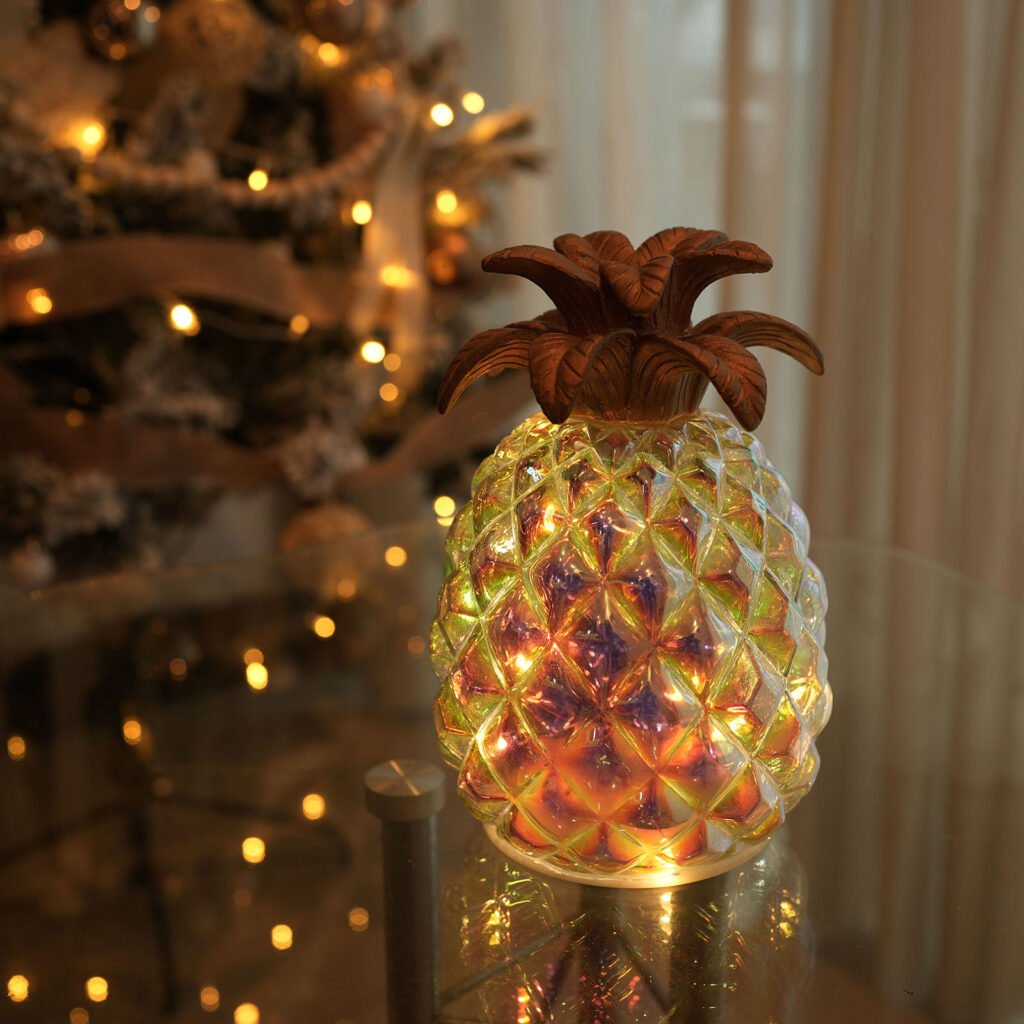
Small rooms benefit from light at several heights, but too many lamps, cords, and glowing objects can make the space feel crowded. The goal is not maximum brightness. It is a useful base layer for daily tasks plus one or two warm accents that soften corners and give the eye a place to rest.
Separate functional light from decorative light
Ceiling fixtures, desk lamps, and reading lamps should provide the illumination needed for movement and tasks. A glass pineapple, pumpkin, tree, or globe is an accent. It adds atmosphere but should not be the only light used for stairs, food preparation, reading, or other safety-sensitive activities.
Place light at more than one height
A room lit only from the ceiling can feel flat. Add a task lamp around seated eye level and a small decorative light lower on a shelf or table. The variation creates depth without adding several large fixtures. In a compact room, choose surfaces that already have a purpose rather than adding new furniture solely for lighting.
Use reflective glass carefully
Mercury and iridescent glass can multiply light, especially near mirrors or glossy furniture. One reflective accent may be enough. If the room already contains metallic frames, mirrored doors, or polished stone, pair the light with matte wood, fabric, or ceramic to prevent visual glare.
Protect valuable surface area
Measure the base of the decoration and leave space around it. A nightstand still needs room for everyday objects. A desk light should not interfere with work. A shelf requires enough height clearance and a stable surface. Cordless designs solve the cable problem but not the need for safe placement.
Choose a consistent color temperature
Warm-white decorative LEDs generally work best with other warm or neutral room lighting. If the main lamp is very cool and the accent is warm, the contrast can feel accidental. You do not need an exact technical match, but the sources should support the same mood.
Let a timer support the evening routine
Set a six-hour timer to begin near sunset or when the room is normally used. In a bedroom, choose a start time that allows the light to switch off before it becomes distracting. Timer mode can also prevent a small accent from being left on throughout the night.
A compact-room lighting plan
- Keep one reliable overhead or floor-level source for safe movement.
- Add one task lamp where reading or work occurs.
- Choose one decorative light for mood and shape.
- Reduce competing reflective accessories around it.
- Observe the room in daylight and at night before adding anything else.
Common mistakes
Avoid using many small lights with different colors and flashing patterns. Do not place fragile glass on a narrow ledge, near loose curtains, or where a door can strike it. Never cover a battery compartment or operate an indoor-only light in a wet location.
Good ambient lighting makes a small room feel considered, not filled. Build the practical lighting first, then add one decorative source that contributes warmth, texture, and personality. Compare compact accents in the HVFUN shop.