
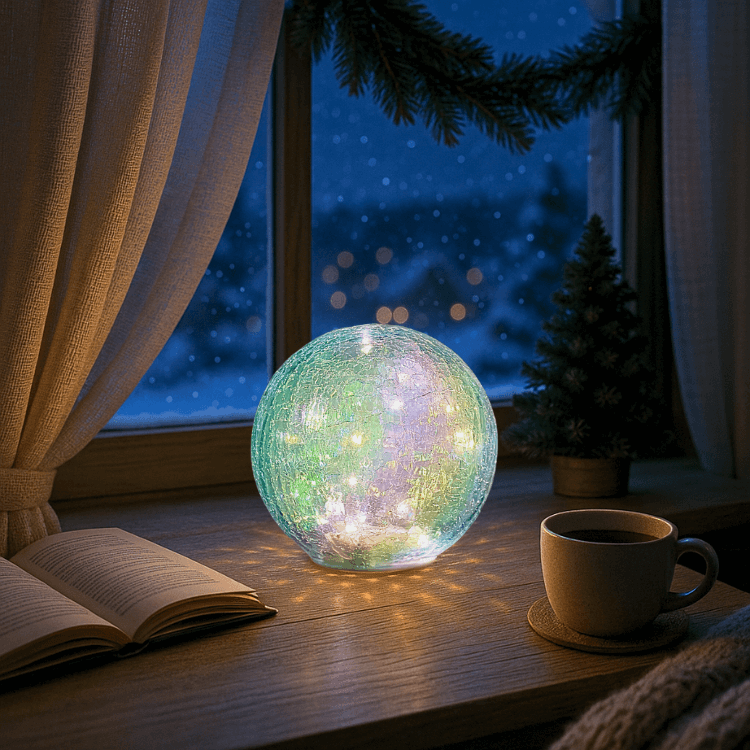
Coastal interiors do not require anchors, ropes, or seashells on every surface. Light, texture, and a restrained palette can suggest water and open sky more subtly. Iridescent and crackle glass are useful because they change with the room: daylight produces shifting reflections, while warm LEDs create small points of light after dark.
Begin with a three-color palette
Choose one light neutral, one water-inspired color, and one warm balancing tone. For example, use ivory, muted blue, and natural wood. An iridescent blue glass globe can sit inside that palette without forcing every accessory to match. Repeating the blue only once elsewhere—a cushion, book spine, or small piece of art—is usually enough.
Use crackle texture as an accent
Crackle glass breaks reflected light into fine lines. That makes it visually active, especially when illuminated. Give it a calm background rather than placing it among several other heavily textured objects. A plain wall, simple tray, or stack of solid-color books lets the glass do the detailed work.
During the day, position iridescent glass where it receives indirect natural light. Strong direct sun can create glare and may not be suitable for every finish or surrounding material. At night, the internal light becomes the focus.
Balance cool color with warm material
Blue and silver can feel cold when every nearby surface is glossy. Add oak, rattan, linen, stone, or matte ceramic to soften the arrangement. The contrast makes reflective glass feel intentional rather than showroom-like.
Good locations for a cordless globe
- Console table: combine the globe with a shallow tray and one piece of framed art.
- Bookshelf: use it as a rounded shape among books and rectangular frames.
- Bedroom: place it on a stable dresser as ambient light, not as the only reading light.
- Covered entertaining area: use only if the product is rated for that environment; indoor-only pieces should remain indoors.
Avoid turning the room into a theme set
Literal nautical objects can be charming, but too many compete for attention. Choose one direct reference—perhaps coastal artwork or a shell collected responsibly—and let color and material carry the rest of the mood. A glass light then feels like part of the room rather than a novelty.
Plan for the unlit hours
A six-hour timer means the lamp is unlit for most of the day. Check how the glass looks beside the furniture and wall color when switched off. Iridescent finishes can remain decorative in daylight, which makes them useful on surfaces that are always visible.
Connect the accent to the rest of the room
A reflective glass object feels more integrated when one nearby element repeats either its color or its shape. A round mirror can echo a globe without matching it exactly. A blue thread in artwork or textiles can connect an iridescent finish to the wider palette. Keep the repetition subtle: two or three related details are enough.
If the room already has a strong ocean photograph or patterned rug, let that be the main statement and keep the tabletop arrangement simple. Coastal character comes from the relationship among light, color, and natural material, not from the number of themed objects.
Coastal styling is strongest when it feels airy, not crowded. Use one reflective accent, surround it with quiet natural materials, and repeat its color sparingly. View the HVFUN crackle glass globe for its dimensions and lighting specifications.