
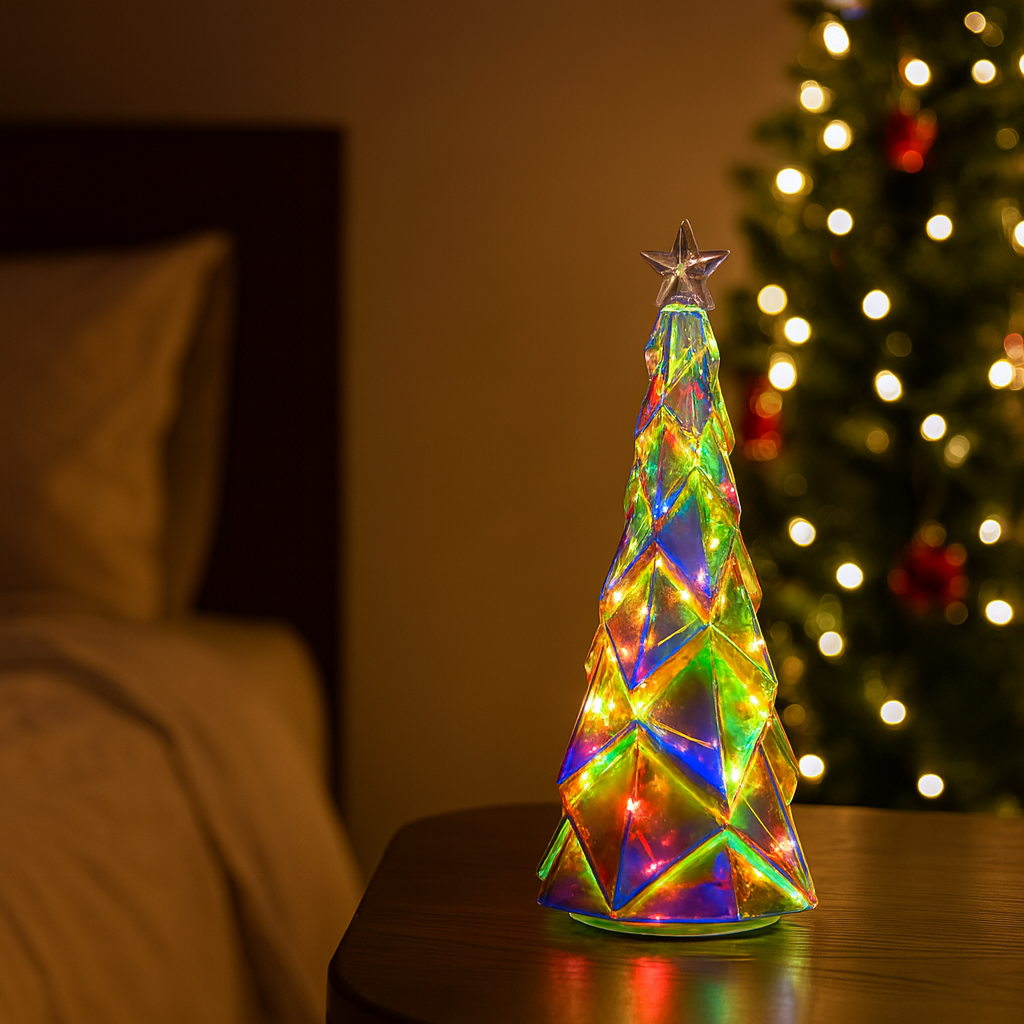
Battery-operated decorative lights are useful when the best styling location is nowhere near an outlet. A mantel, dining centerpiece, entry table, bookshelf, or covered party display can gain a warm focal point without a visible cord. The freedom is valuable, but cordless does not automatically mean convenient. Size, light pattern, timer behavior, battery access, and glass finish all affect how well the piece works in a real room.
Start with the location, not the product photo
Measure the available surface and the visual space above it. An 8-inch accent can sit comfortably beneath shelves or inside a layered display. A 12-inch tree or taller sculpture carries more visual weight and usually works better as the highest point in a grouping. Leave clearance around glass pieces so sleeves, curtains, cabinet doors, and serving dishes do not knock them over.
Also consider the viewing distance. Fine texture and glitter are noticeable on a bedside table or console. From across a living room, silhouette and brightness matter more than tiny surface details.
Choose the kind of glow you actually want
A steady warm-white light supports calm, everyday ambience. Twinkle modes feel more festive and attract attention, while rotating or color-changing lights create a livelier party effect. A clear or crackled surface throws sharper highlights. Mercury-style and textured finishes soften the LEDs and make the object itself appear luminous.
For a dining table, a softer steady setting is less distracting. On a mantel or entry table, a twinkle mode can work as a focal point. If a product offers both, think of the second mode as flexibility rather than assuming brighter is always better.
Understand the timer before relying on it
Many HVFUN decorative lights use a six-hour-on and eighteen-hour-off cycle. The moment you activate the timer becomes the beginning of the daily schedule. If you want the light on from 5 p.m. to 11 p.m., start timer mode at 5 p.m. It should repeat at approximately the same time each day until the batteries are removed, depleted, or the mode is reset.
A timer is especially useful for displays that are easy to forget, but it does not replace routine checks. Turn the item off before moving it, replacing batteries, or storing it.
Check battery type and access
Look beyond the phrase “battery operated.” Confirm whether the piece uses AA or AAA batteries, whether batteries are included, and where the compartment sits. A bottom compartment is discreet but requires lifting the decoration. That is simple for a small lamp and less convenient in a crowded centerpiece.
Use one fresh set of matching batteries. Mixing old and new batteries can produce uneven performance. Remove batteries before long-term storage to reduce the risk of leakage.
Match the finish to daylight as well as evening light
Iridescent glass can reflect nearby colors during the day, while gold or silver mercury glass has a more defined palette. Clear glass and glitter-filled designs may look lighter and more transparent when switched off. Because a decorative light spends many hours unlit, choose a finish that still belongs in the room during daytime.
A quick decision checklist
- Measure the surface, height clearance, and distance from the edge.
- Choose steady, twinkle, or color-changing light for the intended mood.
- Confirm the timer cycle and the switch position that activates it.
- Check battery type, compartment access, and indoor or outdoor rating.
- Select a finish that works both illuminated and unlit.
The best cordless light is not necessarily the largest or brightest. It is the one that fits the space, creates the intended atmosphere, and is easy enough to operate that you will use it regularly. Browse the HVFUN collection to compare decorative glass lights by shape, size, and finish.